Some quoting mistakes only become visible after the order arrives. A test omitted from the price, a misread technical requirement, or a delivery date promised before checking with a supplier can turn a successful sale into a loss. The problem may have started weeks earlier, when someone prepared the quote using incomplete information, left an assumption unchallenged, or missed a change that another team needed to know about.
RFQ management brings sales, engineering, procurement, production, and finance into the same decision process. Together, they need to establish what the customer requires, whether the company can deliver it, and the conditions under which the work makes commercial sense. The quote is the customer-facing result of that assessment.
AI can reduce the work involved in gathering and reviewing this information. To use it effectively, a business first needs to understand the decisions between receiving a request and sending a quote: what evidence each decision needs, who is responsible, and what requires approval.
What RFQ management covers
An RFQ, or Request for Quotation, asks suppliers to provide prices and terms for specified goods or services. SAP’s definition of an RFQ describes this invitation from a purchasing organization to a supplier.
Here, we look at the process from the supplier’s side: the business receiving the request and preparing a customer quote. Its work includes registering the request, deciding whether to bid, reviewing technical and commercial requirements, obtaining approvals, and managing subsequent revisions.
The depth of that work depends on the request. A standard spare part may need a current price and an availability check. A custom machine, equipment package, or engineering project can require drawing reviews, detailed costing, and supplier discussions. Requests should follow a review process proportionate to their complexity.
Establish ownership and scope when the request arrives
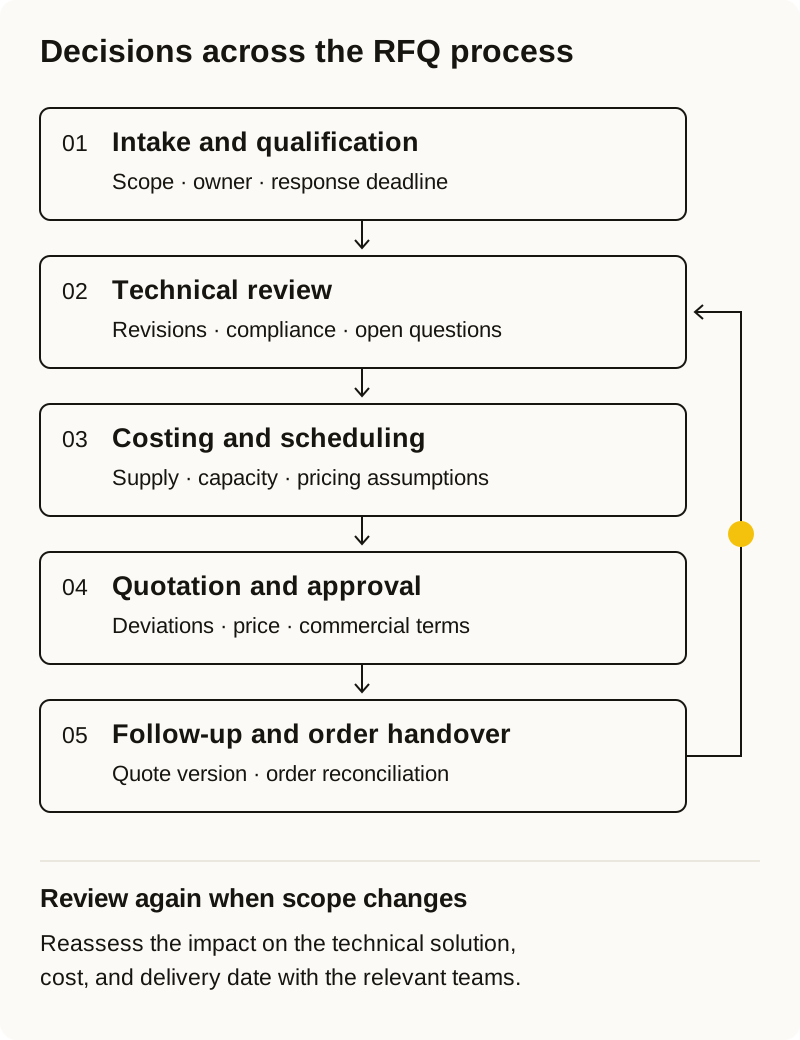
Requests may arrive through email, a customer portal, or a sales representative. Bringing them into a shared record makes the work easier to track. That record should identify the customer, project, quote reference, response deadline, requested delivery date, and supporting documents. Someone also needs to own the preparation of the quote.
Two dates deserve separate attention: when the customer needs the quotation and when they need the product. The first sets the quoting team’s deadline; the second drives procurement and production planning. Confusing them can leave a team responding promptly with a schedule it cannot meet.
An initial review can then establish whether the request fits the company’s offering and capabilities. Is there sufficient capacity? Are the required certifications and technical skills available? How much engineering effort will the quote take? Is there enough information to price the work?
The outcome may be to proceed, ask the customer for clarification, or decline to quote. Making this decision early helps the team allocate its time. Recording the reason for declining also reveals which opportunities the business loses because of capacity, price, or technical scope.
Track document revisions as carefully as the requirements
An RFQ package can include specifications, drawings, bills of materials, quality requirements, customer standards, and clarifications buried in email threads. New versions may arrive while the quote is being prepared.
Each requirement should therefore retain a reference to its source document and revision. A page or clause reference lets engineering check the extracted information directly. If a customer clarification changes an earlier requirement, that change needs to be reflected in the working record.
Suppose a customer changes the specified material in an email after issuing the original drawing. If costing uses the drawing while the technical proposal uses the email, the two parts of the quote disagree. Revision control helps the team keep the scope and its price aligned.
When documents conflict, the team should seek clarification rather than silently choose an interpretation. Until the customer responds, the record should show which part of the quote is affected. An owner and an expected response date make the outstanding question actionable and explain why the work is waiting.
Assess technical compliance requirement by requirement
Matching a product name or a few catalog values does not establish compliance with the full specification. Materials, operating conditions, dimensions, tests, documentation, and maintenance requirements may all need review.
A technical compliance matrix organizes that work. Each row records the customer requirement, proposed solution, compliance status, and supporting evidence. It should also identify unmet conditions, questions awaiting clarification, and alternatives that require approval.
For example, a customer may specify an IP66 motor while the standard product uses an IP55 motor. Finding an alternative is only part of the assessment. Engineering must confirm that it can be used with the product, and the team must check its effect on cost, availability, and the production schedule. One technical requirement can change several parts of the quote.
If the proposed solution departs from the customer’s specification, the technical proposal should state the deviation explicitly. Internal approval of an alternative does not establish customer acceptance. Leaving that distinction unresolved can create a dispute after the order is placed.
Build the cost estimate around the actual scope
Accurate pricing starts with knowing what the price includes. Depending on the job, costs can extend beyond the main product to special components, engineering, tooling, testing, certification, packaging, freight, installation, and commissioning.
The cost estimate and technical scope need to use the same information. An additional acceptance test or documentation requirement should be reflected in the price. Work excluded from the offer should be described clearly enough for the customer to understand the boundary.
For purchased items, the team needs to know when the supplier quoted, the currency, validity period, minimum order quantity, and delivery terms. Reusing last year’s price or applying a volume discount to a small order can understate the cost.
Commercial review then considers the selling price alongside discount authority, target margin, and payment terms. Extended payment periods or milestone payments can also affect the funding the work requires. Where costs remain uncertain, the approver should be able to distinguish estimates from confirmed amounts and see the assumptions behind them.
Base delivery dates on supply and capacity
The customer’s requested date is an input to planning. Establishing whether the business can meet it requires a view of material availability, supplier lead times, production capacity, subcontracted operations, testing, and logistics.
Inventory checks must distinguish physical stock from stock available for this job. An item in the warehouse may already be allocated to another order or awaiting quality release. The availability information used for the quote needs to reflect those constraints.
Supplier lead times also need a clear starting point. Does the clock begin when the purchase order is placed, the advance payment is received, or the drawings are approved? Does the stated date mean dispatch from the supplier’s factory or arrival at yours?
Production adds another set of dependencies. Some activities run in parallel; others must wait for earlier work to finish. Adding every duration together can therefore give the wrong result. A credible schedule needs the sequence of work, available capacity, and the relevant working calendars.
The resulting date should carry its assumptions. If materials or production capacity have not yet been reserved, that needs to remain visible. An estimated date at quotation stage has a different level of certainty from a confirmed schedule for an accepted order.
Route approvals to the people responsible for the decision
Quote approval should cover the commitments being made. Engineering may approve technical deviations, planning may validate the dispatch date, finance may review commercial terms, and sales management may authorize pricing and discounts.
Routine quotes that meet established rules can follow a shorter approval path. Low margins, unusual payment terms, unmet specifications, or capacity constraints should bring the relevant decision-maker into the process.
Each approver needs to see why their decision is required, what is being proposed, and how it affects the work. Product selection, pricing, and approval workflows are also linked in Oracle’s description of the CPQ process.
If the quote changes after approval, the record should preserve the conditions under which that approval was given. A customer halving the quantity may change unit cost and margin, for example. The affected calculations need review before an earlier pricing approval can be treated as valid for the revised offer.
Keep control after the quote is sent
The business should retain the exact quote version sent to the customer, its issue date, validity period, and attachments. This gives subsequent discussions a common reference.
Customers may reduce the scope, change quantities, or request an alternative product. Those changes belong in a new quote revision. Both the sales team and the customer should be able to understand why the price changed and which conditions still apply.
When an order arrives, it needs a final comparison against the approved quote. Do the product, quantity, price, delivery date, and other terms match? Does the order refer to a different drawing revision? Has the customer included work that the quote explicitly excluded?
Once those differences are resolved, the agreed scope, accepted deviations, documents, and delivery conditions can pass to the team responsible for execution. Production and project teams then receive the commitments they are expected to fulfill before the work begins.
Where AI can reduce the workload
Useful applications include extracting information from emails and documents, organizing requirements, retrieving relevant product records, identifying changes between revisions, and drafting quotation content. AI can also help collect unanswered questions from a long correspondence or flag missing documents.
The extracted information must remain verifiable. A system can misread a unit, miss an exception to a requirement, or misinterpret a note on a drawing. Links to the source and appropriate expert review should therefore be built into the process.
Pricing, tax, margin, and scheduling calculations should use defined rules and calculation tools. AI can help prepare their inputs, while the results depend on current data and the company’s calculation logic. An uncertain cost or missing supplier lead time should remain visibly unresolved.
Permissions need similar precision. Reading stock availability, asking a supplier for a price, placing a purchase order, and sending a customer quote are separate actions. The conditions requiring human approval, especially for external price and delivery commitments, should be defined in advance.
For RFQ management with PromptRails, this division of responsibility is the starting point: the information AI prepares, the data business systems provide, the calculations governed by rules, and the decisions specialists must make. The implementation should follow that allocation of work and authority.
Measure speed alongside accuracy and profitability
A practical first scope is one product family or request type. Reviewing past quotes in that category can reveal where work waits, which information tends to be missing, and which errors recur. The new process can then be assessed against comparable work.
Useful measures include:
- Elapsed time from receiving the request to sending the quote.
- Active preparation time and time spent waiting for customers, suppliers, or internal approvals.
- Rework caused by missing scope, incorrect product selection, or calculation errors.
- The share of requests answered on time and quotes approved on first review.
- The difference between quoted cost estimates and actual costs after order fulfillment.
- The difference between the quoted dispatch date and actual dispatch.
- Reasons for winning or losing the opportunity.
A well-managed RFQ process gives sales a clear basis for explaining what the company can supply, what the price covers, and when the work can be delivered. Engineering, procurement, and production can inspect the conditions behind that offer. AI’s contribution is to reduce the effort of assembling and preparing information so those teams can reach a sound decision sooner.
To assess your own process, follow one recently completed quote from request to order. Identify the information each decision needed, who approved it, and what changed along the way. That review will often reveal the most useful place to begin.